Sunday, 30 July 2017

PHYSIOTHERAPY JOB VACANCIES 2017 SAUDIA ARABIA

1.Saudi Arabia-Consultancy Job-Female Physiotherapist vacancy in Prince Sultan Armed Forces Hospital, Madinah.
Qualification: Saudi Prometric cleared Physiotherapists

Job Updated on July 29
Contact Consultancy: Jessena

Vacancy details: http://ibs.jesseena.com/webportal/php/web_vacancy_listing_show.php?div=M&vacancy_id=MzUzNQ==&vacancy_r_id=MzQ0Mg==&type=vin
E-Mail: jhrhealthcare@gmail.com

2. Oman-Consultancy Job-Female Physiotherapist vacancy for a Medical Centre in Oman.

Qualification: BPT with 3+ years exp. Oman Prometri cleared/applied Physiotherapists
Job Updated on July 29
E-Mail: sushnathphysio@gmail.com

3. Bahrain-Direct Employer-Female Physiotherapist vacancy in a Physiotherapy clinic at Busaiteen, Bahrain.
Qualification: BPT with 3+ years exp
Job Updated on July 29
E-Mail: chemmidu@gmail.com

PHYSIOTHERAPY JOBS 2017 INDIA


  1. Kanpur-Assistant Professor vacancy in Saaii College of Medical Science & Technology, Kanpur, Uttar Pradesh.

Qualification: MPT (Ortho/Neuro)

M: Mr.Sanjay Mathur @ +91 8303151151
E-Mail: gm.scmat@gmail.com, saiicollege@gmail.com


2.Delhi-Female Physiotherapist vacancy in Paras Bliss hospital, a Maternity hospital at East of Kailash, New Delhi.
Qualification: BPT
Website: http://www.parasbliss.com/
Contact HR Department @ 011-40411111 for interview details.


3. Bihar-Physiotherapist vacancy in Aarogya Foundation, a National level NGO working in the field of disability at Sitamarhi, Bihar.
Qualification: BPT

M: +91 9934691872
E-Mail: aarogyaafoundation@gmail.com , divyaangan@gmail.com

Thursday, 27 July 2017

DIET CHART FOR WEIGHT 100kgs + OBESE

                         DIET CHART


WEIGHT : 100 kgs

IDEAL WEIGHT : 65-75 Kgs

SEX : M/F


Empty stomach : 1 glass hot water + 1tsp cumin seeds


Breakfast  : 2 glasses lukewarm water + 1 bowl oats + 2  chapatis+ 1 curry


Mid morning :1 fruit


Lunch : 3 chapattis + 1 curry+ 1 qtr plate salad


Evening tea: 1 cup tea + 1 biscuit


Evening tea :1 tsp green tea + 1 cinnamon + green cardamom + 2 white pepper boiled in 11/2 cup water reduced to 1  cup and add 1 tsp honey.


Dinner :  2 chapattis / bread + 1 curry +   dal/ lentils + 1 qtr plate salad.


DIET CHART TO LOSE WEIGHT EASILY

                    DIET CHART


WEIGHT : 55 -65 kgs

IDEAL WEIGHT : 45-51 kgs

SEX : M/F

DIAGNOSIS : MORBID OBESITY


6 AM /  Morning up time: 1 Glass lukewarm  water 1 Lemon and 1 tbsp honey.


6 : 45 AM : 2 Glasses lukewarm  water 


8: 00 AM : BREAKFAST :  1  Cup milk / 1 tsp green+ 1 tsp honey +1 green cardamom + 1 stick cinnamon +  2-3  white pepper  + ginger boiled in 11/2 cup water reduced to 1cup AND sandwich (1 slice each tomato ,  cucumber & onion).


11 : 00 AM :  1 Fruit  - 100 gms.


2 : 00 PM :  1 qtr plate salad + 2 chapattis/ bread + 1 curry + curd


4 : 00 PM :1 cup tea + 1 biscuit 


8: 00 PM : 1 qtr plate salad + 2 chapattis/ bread + 1 curry + dal /lentils


TREATMENT OF PAIN AFTER LONG HOURS OF DRIVING


A study on Activation of Neck and Low-Back Muscles Is Reduced with the Use of a Neck Balance System Together with a Lumbar Support in Urban Drivers was conducted by Menotti, F., Labanca, L., Laudani, L., Giombini, A., Pigozzi, F., & Macaluso, A.  PloS one, 10(10), e0141031.(2015)The aim of this study was to investigate the use of a neck balance system together with a lumbar support on the activation of low back and neck muscles during driving.       


Image result for NECK BALANCE SYSTEM AND LUMBAR SUPPORT in drivingImage result for NECK BALANCE SYSTEM AND LUMBAR SUPPORT in driving 


                                                                                                                                                                                        Fig : Neck and Lumbar support while driving

Twelve healthy male subjects (age 32±6.71 years) were asked to drive in two conditions: 1) with devices; 2) without devices. During vehicle accelerations and decelerations root mean square (RMS) of surface electromyography (sEMG) was recorded from the erector spinae, semispinalis capitis and sternocleidomastoid muscles and expressed as a percentage of maximal voluntary contraction (MVC).

The pitch of the head was obtained by means of an inertial sensor placed on the subjects’ head. A visual analog scale (VAS) was used to assess the level of perceived comfort.RMS of the low back muscles was lower with than without devices during both acceleration and deceleration of the vehicle (1.40±0.93% vs 29 2.32±1.90% and 1.88±1.45% vs 2.91±2.33%, respectively), while RMS of neck extensor muscles was reduced only during acceleration (5.18±1.96%vs 5.91±2.16%). 

There were no differences between the two conditions in RMS of neck flexor muscles, the pitch of the head and the VAS score. 

The use of these two ergonomic devices is therefore effective in reducing the activation of low-back and neck muscles during driving with no changes in the level of perceived comfort, which is likely due to rebalancing weight on the neck and giving a neutral position to lumbar segments.

A study on Effects of exercise on pain of musculoskeletal disorders was conducted by Rodrigues, E. V., Gomes, A. R. S., Tanhoffer, A. I. P., & Leite, N. Acta ortopedica brasileira, 22(6), 334-338. (2014)


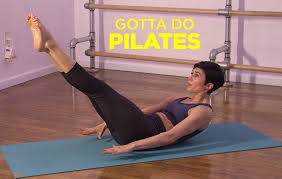
 Image result for pilates stretching in driving    Image result for pilates stretching in driving


The aim of this study was to verify the effectiveness of workplace exercises to control musculoskeletal pain and its frequency, intensity, duration and type of exercises used. Randomized control trials which performed worksite exercises were selected and the studies were assessed by their methodological soundness.

 Ten articles were selected which investigated the resistance training, cardio respiratory exercises, Pilates, stretching, postural orientation and exercises for relaxation. Workplace resistance training performed at 70-85% RM.The primary outcome found in this systematic review on the effects of regular and targeted exercise conducted in the workplace, was the improvement of pain in shoulders, wrists and spine.  
                    Image result for pilates stretching in driving
 Of the ten studies analyzed in this review, all showed significant improvements in reducing pain in the trapezius muscle in shoulders, wrists, cervical, dorsal and lumbar spine. 

Strength exercises with intensity of 70-85% of RM performed in the workplace, three times a week for 20 minutes are able to reduce musculoskeletal pain in shoulders, wrists, cervical, thoracic and lumbar spine. Despite the variations found in the protocols used in each study training, pain improvement was observed in all training intensities investigated. 

Non-specific exercises for the pain location as stationary bike, plyometric paddling devices and kaiake, Pilates and relaxation  exercises, as well as stretching exercises also promoted decrease of pain.


 A study on the effects of self stretching on pain and musculoskeletal symptom of bus drivers by Lee, J. H., & Gak, H. B. (2014). Journal of physical therapy science, 26(12), 1911-1914.  

The aim of this study was to evaluate the musculoskeletal symptoms, pain and risk of postures as well as the effects of stretching exercise on the work-related symptoms and pain of bus drivers.

Eighty-one drivers were randomly recruited from a bus corporation for this study. Information about pain levels, painful regions, and general characteristics of subjects was obtained using the symptom research form (KOSHA Code H-30-2003). 

The level of pain was assessed on a scale of numeric rating scale (NRS) which is divided by 10. Ergonomic posture assessment was conducted using the rapid upper limb assessment (RULA). 

Self-stretching exercise was performed for 4 weeks by the bus drivers who suffered from neck and shoulder pain. Self-stretching exercise was performed in two ways. In one exercise the levator scapulae, upper trapezius muscle and sternocleidomastoid muscle were stretched), and in the other the subjects performed a self-stretching exercise described by Kim and Lee consisting of seven movements. 
Image result for scm levator scapulae and upper trapezius self stretches exercise in driving                     Image result for scm levator scapulae and upper trapezius self stretches exercise in driving             Image result for upper trapezius self stretches exercise in driving

Fig : Levator scapulae stretch 


Each stretching movement was performed three times per set, three times a week for four weeks, and the subjects were instructed to maintain maximum stretch for more than 25 seconds and then relax in order to obtain the benefits of stretching.


Musculoskeletal symptoms were present in the order of shoulder, neck, lower back and lower extremities. Compared with other jobs, the final score, and the action level of bus drivers were very high, showing 57.6% of action levels 3 and 4.

A statistically significant decrease of pain was shown after the self-stretching intervention. There was also a significant decrease of musculoskeletal symptoms in the neck and shoulders after the selfstretching exercise.

The effects of stretching on musculoskeletal pain has reported that the pain score decreased from 5.52 before the intervention to 4.80 after stretching was performed for 4 weeks. In addition, Kim study on the effect of stretching on VDT workers’ upper extremity pain also reported a decrease in upper limb pain after the performance of stretching. 

Neck and shoulder musculoskeletal subjective symptoms and pain were decreased by 4 weeks of stretching in this study. Post-intervention, there was a statistically significant decrease of 25% in subjective symptoms in the neck, and of 28% in the shoulder. 

The pain level of the most painful part of the neck and shoulders also significantly decreased.


PREVELANCE OF MUSCULOSKELETAL PAIN IN LONG DISTANCE TAXI DRIVERS


A study done by Dr Akinpelu, A. O., Oyewole, O. O., Odole, A. C., & Olukoya, R. O. African Journal of Biomedical Research, 14(2), 89-94. (2011) on prevalence of Musculoskeletal Pain and Health seeking Behaviour among Occupational drivers in Ibadan, Nigeria.

  Data on Musculoskeletal Pain experience, perception and health seeking behaviour was collected through interview using the structured and Standardized Nordic questionnaires for analysis of musculoskeletal symptoms and health seeking behaviour. 

Data was analyzed using Mann Whitney U and Chi square tests. Majority (89.3%) of the participants reported experience of musculoskeletal pain in at least one part of the body during 12 months prior to the study. 

The most commonly reported site of pain was low back and it was reported by 64.8% of other common sites include the shoulder (30.8%), the knee (27.0%) and the neck (17.0%). The least reported site of pain was the upper back (2.6%).


A study on Occupational and personal determinants of musculoskeletal disorders among urban taxi drivers in Ghana was conducted by  Abledu, J. K., Offei, E. B., & Abledu, G. K. (2014).  International scholarly research notices, 2014.

This study estimated the prevalence, body distribution, and occupational and personal determinants of MSDs in a sample of taxi drivers in the Accra Metropolis of Ghana.A total of 210 participants were enrolled in this cross-sectional study. 

All the participants were evaluated by using a semistructured questionnaire and the Standardized Nordic Musculoskeletal Disorder Questionnaire.

The estimated prevalence of Musculoskeletal Disorders ( MSDs ) was 70.5%.The prevalence of the various MSD domains was as follows: lower back pain (34.3%), upper back pain (16.7%), neck pain (15.2%), shoulder pain (11.0%), knee pain (10.0%), hip/thigh pain (2.9%), elbow pain (4.8%), ankle/feet pain (2.4%), and wrist/hand pain (1.9%).

Multiple logistic regression analysis of the data showed that participants who were employee drivers, drove taxi more than 12 hours per day or at least 5 days per week, perceived their job as stressful, and were dissa,tisfied with their job were at a greater risk of developing MSDs.

Wednesday, 26 July 2017

HEALTHY PASTA SALAD

                   INGREDIENTS:


  • Pasta    3 cups
  • Water   3 cups
  • Cucumber 2 chopped
  • Capsicum 2 chopped
  • Pomegranate 2 
  • Mangoes 4 chopped
  • Apples    2 sliced
  • Curd 1 cup
  • Mayonnaise 3 tbsp
  • Salt and Pepper 3 tsp
  • Mint 2 tsp chopped

METHOD:


  • Take a bowl add curd , mayonnaise , salt & pepper. Boil the pasta in water and 1 tsp oil , strain it and add to the curd mixture.
  •  Next add all the veggies and fruits to it.
  • Garnish it with fresh mint leaves and REFRIGERATE for 4-5 hours.
Serve chilled.

UAE (DHA/HAAD/MOH) , Saudi Arabia, Qatar and Oman License exams can be taken online from India. Eligibility: BPT with 2 + years experience...